
Nowadays, the progress of automotive materials is tightly around environmental protection, energy saving, safety, comfort and low cost of these themes, so the development of automotive materials is more diversified, among which the most prominent and urgent is lightweight, compared with 10 years ago, the structure of automotive materials has changed significantly. The use of new materials and advanced manufacturing techniques complement each other. The automobile industry is trying to develop new manufacturing techniques and renew the traditional industry. Light material divides traditional aluminum material and magnesium material outside, titanium material and composite material also are the light material with excellent performance, nevertheless current price is still some higher, but as the progress of technology and dosage increase, the price will drop slowly.
Titanium has long been favored by manufacturers for its excellent performance such as light weight and high strength. Titanium has been used in racing cars for nearly 40 years. At present, there are no racing cars and sports cars without titanium. The United States has produced titanium components such as intake valves, exhaust valves, valve retainers and rods for racing cars and Japan was the first to use titanium in the Nissan “382” car.
Engine Connecting Rod
When the car is running at full speed, the friction loss of the engine is mostly caused by the piston connecting rod parts (piston, piston pin and connecting rod). After its mass is reduced, the fuel efficiency is greatly improved and the exhaust capacity is correspondedly reduced. By using titanium, the drive temperature of the engine is raised and the engine is used at a higher temperature than the previous aluminum component. The connecting rod should have high strength and fatigue resistance, rigidity and wear resistance, so titanium alloy and composite materials become the appropriate material for the manufacturing of connecting rod, to achieve the lightweight piston and piston pin, so that the noise and vibration have been significantly reduced, the performance of the engine has been improved. Because the piston pin has high requirements for strength, wear resistance, rigidity and heat resistance, it should choose titanium alloy containing more titanium and aluminum compounds. The speed of the engine is increasing day by day and it is better to use titanium alloy to prepare valves and gears, because titanium alloy has excellent creep resistance and oxidation resistance. Titanium composite material and AITI alloy are superior materials for preparing exhaust valves and TC4 alloy is the most suitable for preparing suction valves with lower temperature.
In 1956, Volkswagen made a much-touted show-car with an all-titanium body. The next COO was equipped with a 300mL cylinder engine, with a net weight of only 290 kg. It was made of lightweight materials such as Al, Mg and Ti resin matrix composites, with a fuel efficiency of 100 km/L. The 1990 Honda NSX V-6 racing rod is made of Ti-3Al-2.5 V-Si-Re alloy, a high-speed cutting alloy; The connecting rods of the 3.0-L 24-valve V-6 engine on the 1994 NSX racing car were forged with titanium alloy. Titanium alloy connecting rod is used in the V12 engine of Italian Ferrari EN20 supercar 2003to greatly enhance its maneuverability and boost speed can reach 62 km/h in 3.9s. The connecting rods of Porsche cars are also made of titanium.
The valve seat is made of titanium alloy, widely used in racing cars, multi-purpose Ti-6Al-4V alloy manufacturing, also useful Ti-5Al-2Cr-1Fe alloy manufacturing, the valve seat shape is simple, easy mechanical processing, the cost is lower, not to mention the need for special surface treatment, the quality is lighter than steel 10 g ~ 12 g. Japanese automakers use Ti-5Al-2Cr-1Fe to make crankshafts and other parts and Ti-6Al-4V to make rocker arms, valve springs and lower bolts for connecting rods. According to the experience of Japan, the use of 0.8kg ~ 0.9kg titanium for automobile power valve is equivalent to the effect of weight loss of 20 kg.
Vent Pipe And Muffler
Titanium is widely used in automobile exhaust pipes. In the past, exhaust pipes and mufflers were mostly made of ordinary steel, aluminum alloy, fiber reinforced plastics (FRP), etc. Exhaust temperature > 400℃, the heat resistance of titanium is much higher than that of aluminum alloy, the strength is higher than that of steel. The manufacture of exhaust pipe and muffler must go through various forming processes such as bending and cold pressing and the material is required to have good cold forming performance. In addition, the muffler for the car external assembly parts, with titanium alloy manufacturing appears more novel and more fashionable. The titanium alloy exhaust pipe is shown in Figure 1.
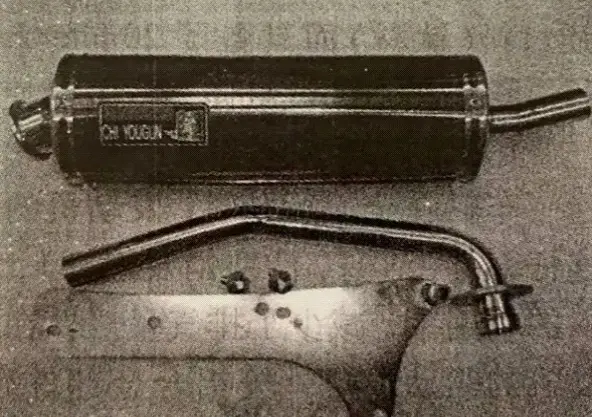
In addition to the requirements of heat-resistant, wear-resistant exhaust valve, but also request it free of lead and cobalt. The United States automobile companies use titanium alloy manufacturing inlet and exhaust valve, the intake valve is TC4, exhaust valve using Ti-6Al-2Sn-4Zr-2Mo alloy. Japanese automobile company, racing car valve seats are generally made of TC4 alloy, also can be made of Ti-5Al-2Cr-1Fe alloy. The exhaust pipe is made of titanium alloy tail nozzle/return pipe components, which are not corroded by chlorine and sulfur-containing waste gas and even the weld is not corroded. The exhaust pipe is 8.2 kg lighter than the traditional stainless steel exhaust system, which improves fuel efficiency, speeds up the ability to increase speed and reduces the braking distance.
Titanium alloy muffler quality is only 5 kg ~ 6 kg, which is much lighter than stainless steel. Japan’s car muffler has almost all titanium alloy. General Motors’ (GM) Chevrolet’s titanium muffler and exhaust pipe system weighs just 11.8 kg, 41% lighter than stainless steel’s 20kg, but stronger. The Ti-33.5Al-1Nb-0.5Cr-0.5Si alloy developed by Japan Datong Iron and Steel Company is a kind of good exhaust door material, which has good oxidation resistance and creep resistance. Compared with the traditional martensitic heat resistant steel and nickel alloy used for exhaust door, the outstanding characteristics of titanium alloy are as follows: Small density, good heat resistance, at the same time above 540℃ has a higher strength performance and creep resistance is higher than nickel alloy and good wear resistance.
The actual use has proved that the service life of the titanium alloy exhaust system is the same as the life of the car, which is 12 A ~ 14 A and the service life of the stainless steel device is only 8 A. From this point, it is more cost-effective to use titanium. The quality of titanium alloy muffler is generally less than 12 g, 40% lighter than that of stainless steel, which helps to improve the performance of the car and the service life of the muffler is semi-permanent. Titanium and titanium alloys are completely inert, can be completely recycled without degrading the paper grade and will not bring any harmful by-products in the production process.
Valve seat ring has a wide range of applications in racing cars and sports cars, the world’s output is estimated to exceed 600,000 in 2020, usually made of TC4 alloy, mechanical cutting method can be made, the processing cost is not high and does not need to carry out special surface treatment, such as Japan’s Mitsubishi company with Ti-5Al-2Cr-1Fe alloy valve seat.
Spring
Titanium alloy is a good material for spring manufacture in terms of strength, density and modulus of elasticity. TC4 alloy was used for Porsche 917 racing spring nearly 20 years ago. Ford replaced its steel spiral suspension springs on racing cars with RMI’s C-alloy springs, which lost 53 percent of their mass, but high production costs limited their widespread use. Timet has developed a new Ti-4.5Fe-6.8Mo-1.5Al alloy based on Fe and Mo, named as Low Cost titanium alloy LCB (Low Cost Beta), which not only maintains the advantages of C alloy, but also has a reasonable price and is used in the manufacture of springs. It can be processed with the original steel spring production equipment and supported by Volkswagen. The spring produced is 1/3 lighter than the steel one and the price of titanium alloy is 50% lower than that of the original one. What’s more valuable, the height of titanium alloy spring is 50% ~ 80% lower than that of steel spring, which means that you can get a larger ride and load space.
Besides, the titanium spring has a outstanding advantage of corrosion resistance, which is the fatigue life of the steel spring is reduced by 50% compared with 4% in the air In standard salt spray corrosion fatigue tests. In addition, the titanium spring does not require protective surface treatment.
Fasteners And Brakes
Titanium alloy fasteners have been widely used in aerospace and spacecraft manufacturing because of its advantages such as high corrosion resistance, light weight and small thermal expansion coefficient. If the production cost of titanium alloy decreases greatly, it will also be used in car fasteners. Titanium has low thermal conductivity and wear resistance, so it can not be used in the brake impeller, but because of its excellent corrosion resistance. It has been used in the preparation of the sealing ring of the dynamic connection flange of the brake system and the guide pin of the brake liner and because of its small thermal conductivity and it also has a certain protective effect on the brake fluid.
-
-
Bolt
Metric Coarse Thread Torx Hex Head Flange Bolt Titanium Alloy Hexagonal Bolts Titanium Bolts
$4.20 -
-
-
Titanium and titanium alloy materials
High Quality Titanium Alloy Tube Astm B338 Gr2 Gr7 Ta2 Titanium Pipe Tube
$18.50 -
Titanium and titanium alloy materials
High Purity and High Quality Titanium Wire Grade1 Gr1/Gr2/Gr3/Gr4/Gr5/Ti- etc
$19.50 -
Titanium plate
Titanium Grade 5 Sheet | Ti 6al-4v Gr 5 Plate Ti6al4v Grade 5 Titanium Alloy Sheet
$25.00 -


