Titanium in Power Station
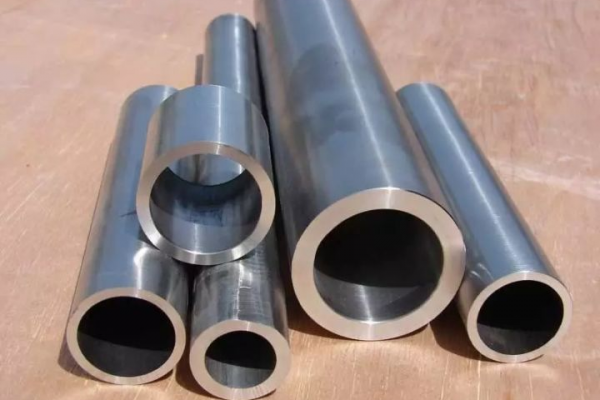
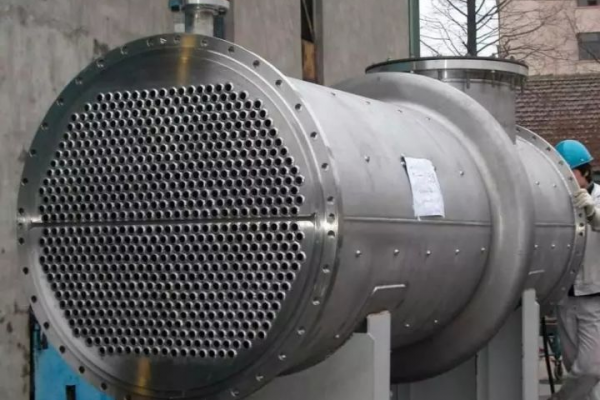
The United States, France, Japan, and other nations began doing experimental research on titanium used in power station condensers as early as the late 1950s and early 1960s. Furthermore, titanium is frequently utilized in auxiliary coolers, contemporary power plant cooling pools, condensers and lubricating oil coolers of generator transformers, and steam turbines.
By the early 1990s, the globe had over 500 thermal power plants, with titanium condensers accounting for more than 30% of the total. According to incomplete data, by the end of 1998, 94 units of roughly 30 power plants in my nation had used titanium condensers, with a total usage of about 3,400 tons of titanium tubes. With the fast expansion of my country’s power construction since 1990, particularly the development of the coastal economy, the development of power in these regions has been substantially pushed, as have the promotion and application of titanium condensers in my country’s power industry. Nonetheless, the localization of titanium tubes for condensers in my nation is still plagued by issues such as high cost and low yield, and many raw materials are still imported.

Key Issues

- Cleaning difficulties
Due to the presence of many sediments, suspended particles, marine animals, and corrosive compounds in saltwater, copper alloy pipes are extremely susceptible to corrosion. Titanium is very resistant to corrosion and does not create hazardous chemicals on its surface, unlike copper alloy tubes. The ability of marine organisms to adhere to the inner wall of a titanium tube reduces its heat transmission efficiency, necessitating a cleaning equipment. - Hydrogen absorption difficulty
Although titanium is exceptionally resistant to corrosion in many highly corrosive conditions, its high affinity for hydrogen makes it relatively simple to absorb. The solid solution limit of hydrogen in titanium is relatively low (approximately 20ppm).If the limit is exceeded, hydrides will precipitate on the titanium surface. Titanium’s impact value and elongation will rapidly drop as surface hydrides grow. This will eventually lead to devastation. - Vibration-related issues
Although titanium condensers can not corrode or leak, vibration can still cause damage. To prevent the vibration issue with titanium tubes, it is vital to choose the proper partition spacing when creating titanium condensers and to confirm that the original partition spacing is sufficient when converting older units.
The growth of my nation’s power sector will be considerably aided by raising the standard of mass manufacturing for titanium tubes and the infrastructure used to support titanium condensers.
-
Fastener
M8 Double-Sided Embossed Washer: GR5 Titanium Anti-Slip Knurled Gasket
$5.00Rated 0 out of 5 -
Fastener
Anti-Slip Knurled GR5 Titanium Washer – M8 Double-Sided Embossed Gasket
$5.00Rated 0 out of 5 -
Fastener
Double-Sided Embossed GR5 Titanium Washer: M8 Anti-Slip Knurled Gasket
$5.00Rated 0 out of 5 -
Fastener
GR5 Titanium M8 Gasket – Double-Sided Embossed Anti-Slip Knurled Washer
$5.00Rated 0 out of 5 -
Fastener
GR5 Titanium Gasket M8 Double-Sided Embossed Washer Anti Slip Knurled Washer
$5.00Rated 0 out of 5